By Friday lunchtime, most festival paths have stopped being grass. By Saturday they are a brown river with a queue. Wellies are the difference between dancing in the middle of things and standing gloomily on the edges, but only if you pack the right ones and treat them like equipment rather than an afterthought. Here is a checklist built for a wet three-day weekend, plus an evening routine that keeps the boots wearable until Sunday night.
Start with the boots themselves
Go tall. Ankle-height rubber boots look neat and lose every argument with a churned-up field. A mid-calf or knee-height boot keeps splash and mud out, which matters far more than weight once the ground turns to soup.
Fit is the part people rush. A wellington that is too tight stops circulation and gives you cold feet within an hour. One that is too loose lets your heel lift with every step, and that is how blisters start. You want a thumb's width of space at the toe with a normal sock on, and a heel that stays put.
Three things to do before you leave:
- Wear the boots on two or three wet walks, including one of at least an hour. New boots plus a festival field is a bad combination.
- Check the tread. Smooth soles on a wet grass slope are genuinely dangerous, especially after dark.
- Add a cheap foam insole if the boot feels roomy or cold. It insulates, cushions and takes up slack.
If you own both a thin rubber pair and a neoprene-lined pair, take the lined ones for a cold, wet weekend. They are warmer and far more comfortable to stand in for six hours.
Socks: pack more than you think
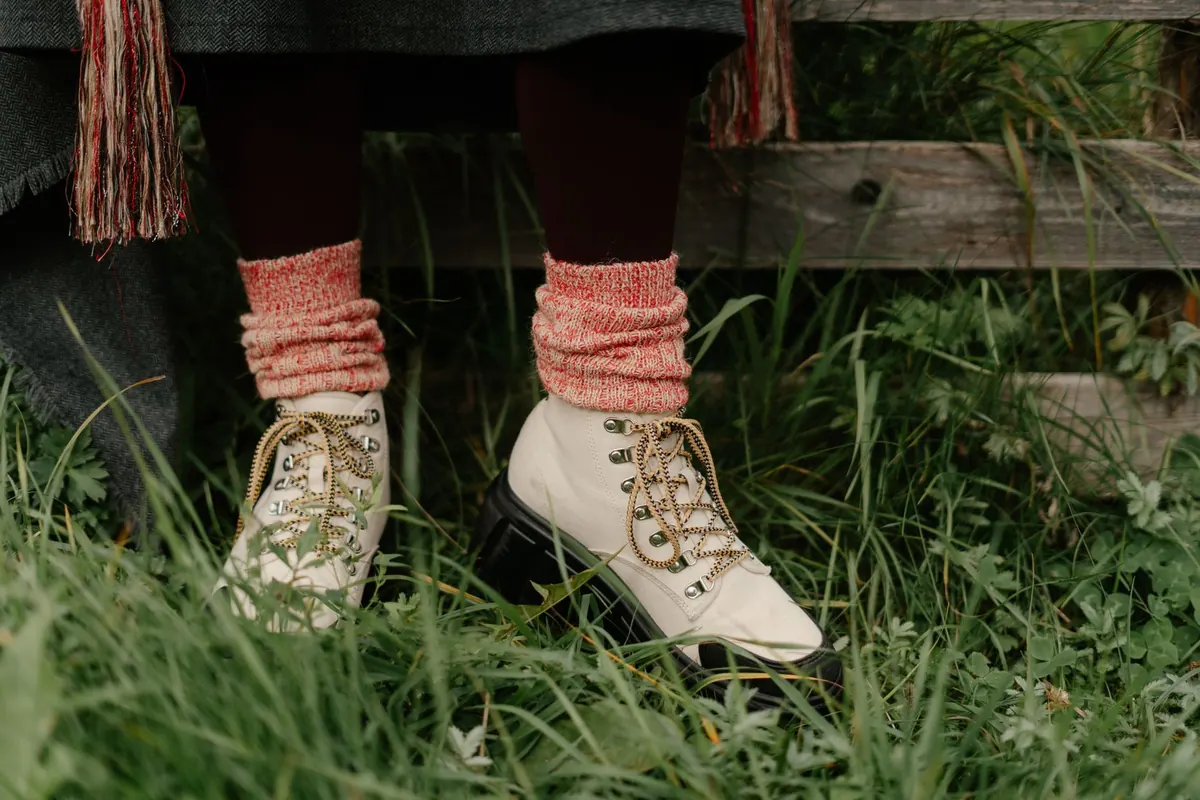
One pair per day is the absolute minimum. Two spare pairs is sensible. Wool or a wool blend is the best choice; bamboo works well too. Cotton is the one to avoid, because it holds moisture against your skin and stays cold once it is damp.
Height matters as much as material. Choose socks that come up above the boot rim, so the rubber edge is not chewing at your calf all day. If you blister easily, a thin liner sock under a thicker outer sock reduces rubbing.
The single biggest comfort upgrade of the whole weekend is a midday sock change. Dry feet at 3pm feel like a new pair of legs, and it stops small hot spots turning into raw patches. Carry them in a roll-top dry bag inside your daypack, not loose at the bottom where the mud gets in.
Blister plasters and a small repair kit
This is the part of the list people skip, then regret. A hot spot treated within ten minutes stays a hot spot. Left until the evening, it becomes a blister that ruins Sunday. Stop walking, clean and dry the foot, apply a plaster, and put a clean sock on rather than the muddy one.
Pack:
- Hydrocolloid blister plasters in two sizes
- A roll of zinc oxide tape for holding dressings in place
- Small scissors or a nail clipper
- A few antiseptic wipes
- Foot powder or talc in a small bottle
- A short loop of cord tied to each boot heel, so you can pull them on without bending
If you have an open wound, diabetes, or a foot condition that makes blisters more serious, speak to a pharmacist, podiatrist or GP before the weekend rather than managing it in a tent.
Bags: one for mud, one for dry
Three bags do all the work. A heavy-duty boot bag or thick rubble sack keeps muddy wellies away from the tent, the car boot and your clean clothes. A roll-top dry bag holds phone, socks and plasters. A small mesh bag takes wet socks so they do not soak everything else.
Keep a dedicated boot station at the tent door: a bin bag on the ground, boots upside down on a stick or tucked under the flysheet, and nothing rubber inside the sleeping area. A wet welly in a closed tent makes everything damp by morning.
Wipes, a brush and the ten-minute evening routine
Mud is much easier to remove while it is still soft. Dried mud is abrasive, gets trodden into the tent floor and works its way into the lining of the boot. Pack a stiff-bristled brush, a microfibre cloth, a handful of cleaning wipes and a couple of bin bags. Never flush wipes, even the ones labelled flushable; bin them.
The routine, every night:
- Rinse or wipe the outside of both boots.
- Wipe around the inside rim, where grit collects and rubs.
- Pull out removable insoles and let them air separately.
- Stuff each boot loosely with newspaper, then stand them upright somewhere airy.
- Keep them well away from the campfire, a heater or a radiator. Direct heat warps rubber and shortens the life of the boot.
If you have two pairs, alternate them: wear one, dry one. Even a single dry day in between roughly doubles how wearable a pair feels.
Keeping them wearable across all three days
Day one. Resist the urge to stamp through the deepest puddle you can find. Fill a boot once and you will be managing damp feet for the rest of the event. Check your socks at the end of the night and note any rubbing points.
Day two. This is the muddy one. Change socks at least once, ideally around the middle of the afternoon. If water came over the top, dry the inside properly overnight rather than pulling the boots on damp in the morning.
Day three. Feet are tired, so support matters more. Fresh socks, plasters on any hot spot before you leave the tent, and a thicker insole if your arches ache. Give the boots a final wipe before packing, so you are not unloading a kilo of field into your hallway on Monday.
Pack it the night before
Lay everything out on the floor: boots, socks with one spare pair per day, plasters, tape, wipes, brush, dry bag, boot bag. Try the boots on with the socks you plan to wear, because a thick sock changes the fit noticeably. If anything rubs now, it will rub ten times harder after eight hours on your feet.
Do that, and the mud becomes a story instead of an inconvenience. You will spend the weekend on the good side of the fence, dancing, with dry feet and boots that still have another festival in them.
Photo: Ahmed akacha / Pexels