Wellington boots are the one item of footwear where a guess rarely works out. There are no laces to loosen and no straps to ease, and the rubber shell that keeps the rain out will not stretch to accommodate a foot that is half a size too long. Measure properly before you buy, though, and your wellies become the most comfortable thing in the porch. Here is how to measure your feet, your calves and your toes' worth of wiggle room, then turn those numbers into a size you can order with confidence.
Why Wellie Sizing Is Its Own Thing
Trainers and leather boots forgive a lot. They soften, mould to the shape of your foot and flex as you walk. A wellington does none of that. The rubber or rubber-EVA shell holds its shape, the sole is stiff, and the shaft wraps your calf rather than sitting open like a boot cuff. That means four measurements decide whether a pair works for you: foot length, foot width, calf circumference and shaft height.
Sock thickness is the fifth variable, and it is the one most people ignore. The same boot can feel roomy over a thin cotton sock and tight over a thick wool one, so decide now what you will wear inside them.
Measure at the Right Time, in the Right Socks
Feet spread and swell through the day, especially after walking or standing in the heat. Measure in the late afternoon or evening and you will get a number closer to your largest. Do it barefoot or in the socks you plan to wear with the boots, on a hard floor, standing up with your weight spread evenly.
Measure both feet and use the larger figure. It is very common for one foot to be a few millimetres longer or wider than the other, and a wellie that fits your smaller foot will punish the bigger one on a long walk. If you can, ask someone to help with the calf measurement so the tape stays level.
Step by Step: Foot Length and Width
- Tape a sheet of A4 paper to a hard floor with one edge against a wall or skirting board.
- Stand on the paper with your heel lightly touching the wall and your weight even on both feet.
- Ask a helper to mark the tip of your longest toe with a pencil held upright, and to mark either side of the widest part of your foot, which is usually across the ball.
- Step off and measure heel to toe mark in centimetres. That is your foot length.
- Measure across the two width marks. That is your foot width.
- Repeat for the other foot and write down the larger of each pair.
As an example, if your longer foot measures 25.6 cm and your width is 10.2 cm, those are the two figures you take to the size chart — not the size on the box of your running shoes.
Measuring Your Calf and Shaft Height
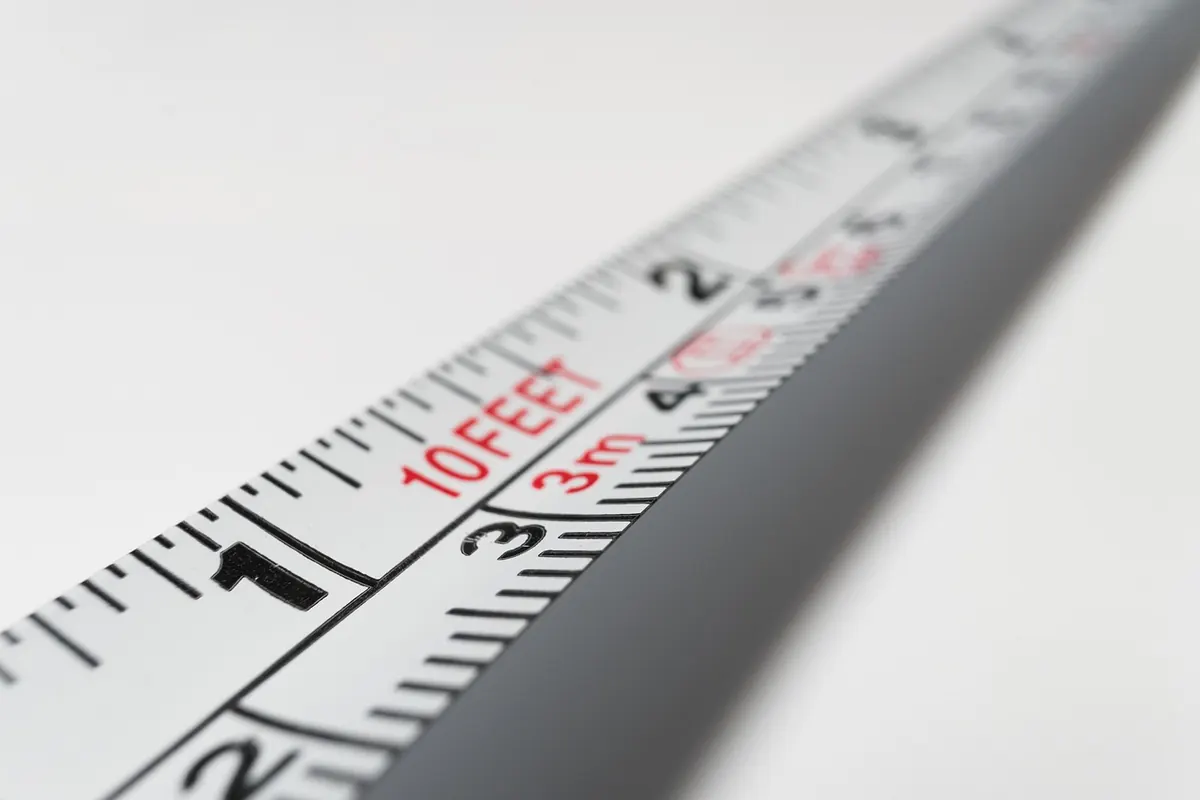
Stand relaxed and wrap a soft tape measure around the widest part of your calf, usually a few centimetres below the knee. Keep it snug enough to stay level but not tight enough to press into the skin. Measure both calves and note the larger number.
Then measure shaft height: from the floor up the back of your leg to the point where you want the boot to finish. Tall wellies should stop just below the crease at the back of the knee; any higher and they will rub when you walk. If you plan to tuck jeans or trousers into them, add roughly 1 to 2 cm to your calf measurement before comparing it with the boot's listed circumference. Ankle-height wellies skip this step entirely.
Turning Your Measurements Into a Wellie Size
Brand charts vary far more than you might expect, so treat your shoe size as a starting point rather than an answer. Where a maker publishes an insole length in centimetres, use it. You want roughly 1 cm of extra length beyond your foot measurement — that covers toe room, thicker socks and the slight forward slide that happens when you walk on mud or gravel. If your foot is 25.6 cm, an insole of about 26.5 cm is a sensible target.
Useful rules for the moment you sit between two sizes:
- When in doubt, go up. A slightly large wellie can be fixed with an insole or a thicker sock. A tight one cannot be fixed at all.
- Half sizes are rare. Most wellies come in whole sizes, so round up rather than down.
- Check the calf column. If your calf is above the boot's listed circumference, look for an adjustable gusset, a buckle strap or a wide-calf style.
- Watch chunky soles. A deep-lug sole with a thick midsole raises your foot inside the boot and can make a style feel shorter and narrower than it looks.
- Neoprene gives a little. Lined and neoprene wellies have slightly more forgiveness than pure rubber, but not enough to size down.
What a Good Fit Should Feel Like
Walk around indoors first, on hard floor then on carpet, wearing your usual socks. Your toes should not touch the front of the boot, even when you push your foot forward as if walking downhill. A small amount of heel lift is normal in a stiff-soled boot, but your heel should not slide up and down like a loose slipper. Across the calf, you should be able to slide a finger down between leg and boot without forcing it, and there should be no pinching or red marks when you take them off.
Rubber does not break in the way leather does, so do not buy a tight pair hoping they will stretch. If they are snug in the shop, they will be snug in a field in February. If you have circulation problems, diabetes or significant foot swelling, it is worth talking to a healthcare professional about footwear fit before you order.
A Quick Checklist Before You Buy
- Foot length and width measured standing, in the evening, in your walking socks.
- The larger foot's measurements written down.
- Calf circumference recorded, plus 1 to 2 cm if trousers will be tucked in.
- Shaft height checked against the back of your knee.
- Brand's own size chart and insole length compared with your numbers.
- Returns policy understood, so an exchange is easy if the fit is wrong.
Fifteen minutes with a tape measure, a pencil and a sheet of paper is all this takes. Do it once and you will know your wellie size for years — through winter dog walks, festival weekends and every muddy gateway between. Order the size your measurements point to, not the size you wear in trainers, and your feet will thank you for it.
Photo: qimono / Pixabay